
Amharic Phrases for Travelers: 6 Essential Cultural Tips You Must Know
Ethiopia is a land where a greeting is never “just a greeting.” It is a ceremony, a bridge, and a sign of respect. As a multicultural powerhouse in the Horn of Africa, Ethiopia is home to over 80 distinct languages and nearly as many unique accents. While Amharic serves as the primary working language, the way it is spoken varies—from the high-altitude rhythm of the Simien Mountains to the bustling, fast-paced streets of Addis Ababa. When visiting the Horn of Africa, learning a few Amharic phrases for travelers is the best way to connect with the local culture.
Table of Contents
For many travelers, landing in Ethiopia feels like entering a world with its own clock and calendar. But the most important thing to pack isn’t your hiking boots—it’s your willingness to learn the local tongue. Attempting to speak Amharic is the fastest way to turn a “tourist” interaction into a genuine human connection.
The Ethiopian Character: Respect, Religion, and History
To communicate effectively, you must understand the “why” behind Ethiopian social norms. Ethiopians are famously proud of their history—being the only African nation never to be colonized. This pride is paired with a deep-seated religious and ethical framework. Whether Christian or Muslim, the concept of “Chewa” (being well-mannered and dignified) is the gold standard of social behavior.
The Reaction to Foreigners: When a foreigner attempts even a simple “Selam” (Hello), the reaction is almost always one of pure joy. Ethiopians are not sticklers for perfect grammar; they view your effort as a profound sign of respect.
“I once tried to order coffee in Amharic in a small village,” says Clara, a travel blogger. “My pronunciation was terrible, but the entire shop lit up. They didn’t laugh; they cheered. They see language as an invitation to friendship.”
Understanding the spirit behind the speech will transform you from a visitor into a welcomed guest. Here are six essential cultural nuances to keep in mind when trying to speak Amharic phrases for travelers:
1. The Power of “Ishi”: More Than Just an “Okay”
If you spend even one hour in a traditional Buna (coffee) house, you will hear a rhythmic “Ishi, ishi, ishi” humming in the background. While the literal translation is “Okay,” it carries much more weight, signifying agreement, understanding, and harmony.
In Western cultures, saying “Okay” once is usually enough. In Ethiopia, repeating “Ishi” multiple times shows enthusiasm and compliance. Whether a taxi driver is explaining a route or a waiter is confirming an order, responding with a warm “Ishi” signals that you are in harmony with the conversation.
2. Navigating the Gender Minefield (Conjugation)
Unlike English, which is largely gender-neutral in its direct address, Amharic changes based on who you are talking to. This is often the biggest hurdle for English speakers. The way you greet a person changes depending on their gender:
- To a man: “How are you?” is “Endet neh?”
- To a woman: “How are you?” is “Endet nesh?”
Using the correct gendered ending shows you’ve done your homework. If you are ever unsure, you can use the formal “Endet Not?” This works for both genders and shows high regard for the person you are meeting.
3. The Hierarchy of Respect: Greeting Elders
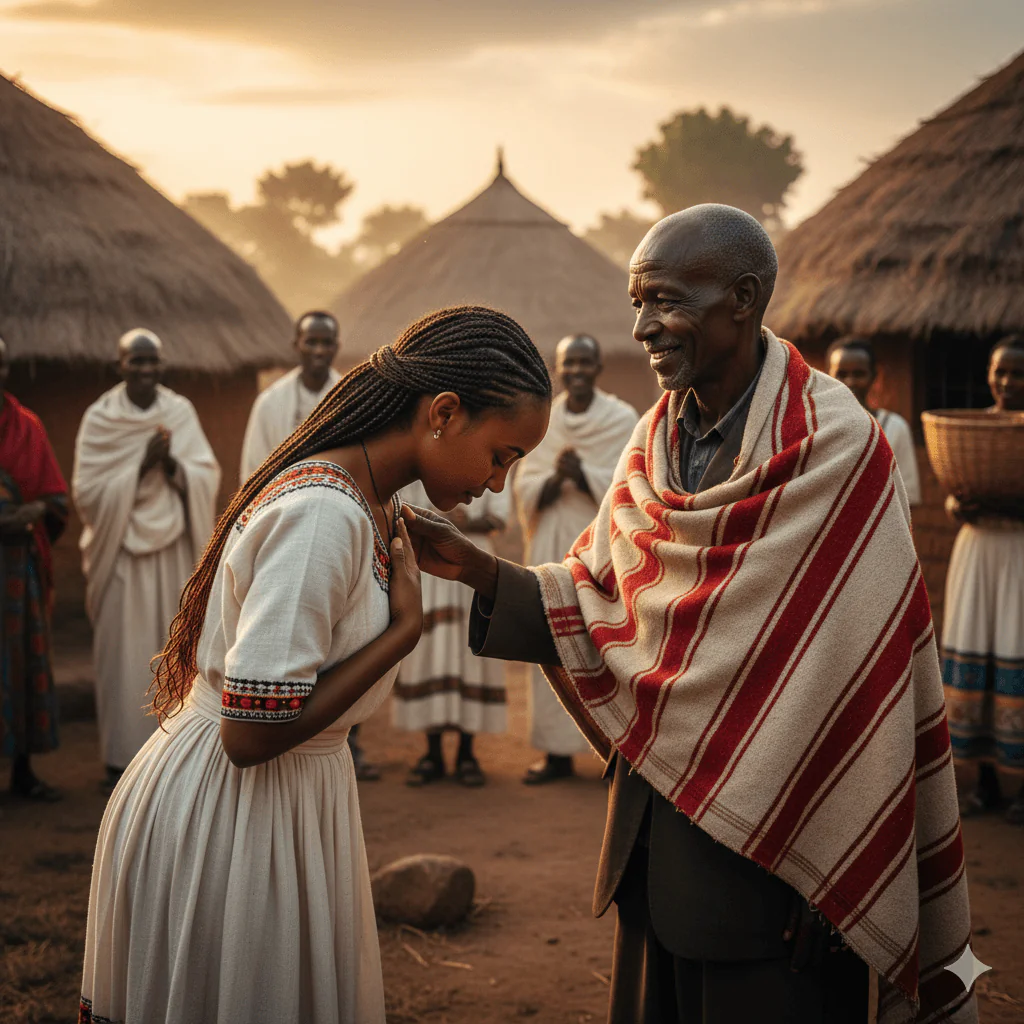
Ethiopian culture places immense value on age, status, and wisdom. Using casual slang with an elder can come across as dismissive. While “Selam” is a perfectly fine greeting for peers, you should use the formal “Tena Yistilign” (May God give you health on my behalf) for elders or authority figures like priests and teachers.
When you use this greeting, it is customary to bow your head slightly. This beautiful, traditional gesture shows humility and proves you value their experience and status.

4. The “Inhaled Yes”: The Silent Sound of Agreement
One of the most unique cultural traits you will encounter is the non-verbal “inhaled yes.” Visitors are often confused when they ask a question and, instead of a vocal “Awo” (Yes), they hear a short, sharp intake of breath—sometimes accompanied by a slight tilt of the head.
This is a pulmonic ingressive sound. It is a perfectly polite way of saying “Yes” or “I’m listening.” As Mark, a traveler from Canada, recalls: “Every time I asked my driver if he understood, he made a sharp gasping sound. I thought he was shocked, but he was just agreeing with me!”
5. Body Language: The “Hand to Heart”
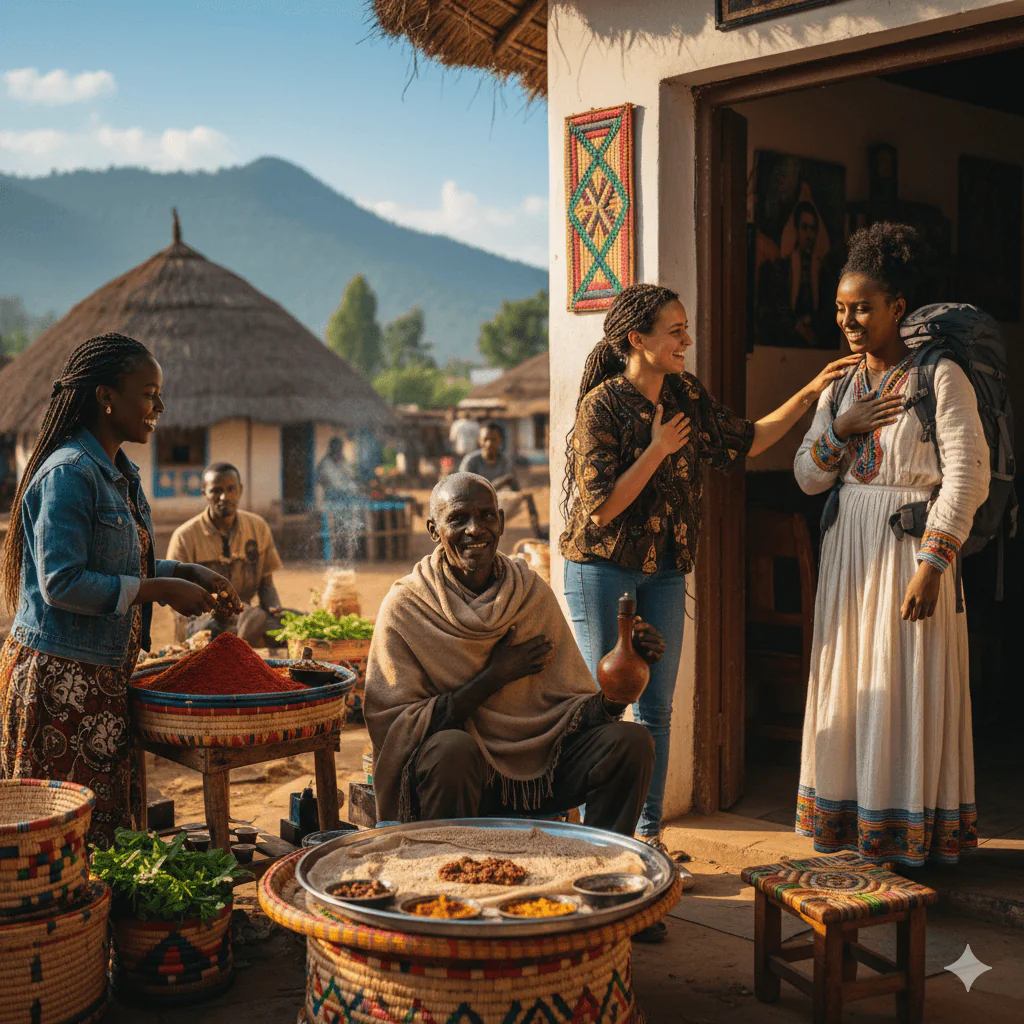
Communication in Ethiopia is as physical as it is vocal. When saying “thank you” (Ameseginalehu), you will often see locals place their right hand over their heart. This signifies that the gratitude is sincere and coming from the heart.
Additionally, when shaking hands with an elder, it is common to use your left hand to support your right elbow. This “supportive” gesture is a sign of extreme politeness and respect.
6. Being “Ethical” in Conversation: Religion and Belief
Ethiopia is a deeply religious society. You will frequently hear the phrase “Egziabeher Yimesgen” (Praise God) as a standard response to “How are you?”
Even if you aren’t religious, it is important to understand that most Ethiopians view daily life through a spiritual lens. Patience, or “Tigist,” is a highly valued virtue. If a bus is late or a plan changes, responding with grace rather than anger will get you much further with the locals.
Conclusion: Why Learning Amharic Phrases for Travelers
Learning Amharic isn’t about perfect grammar or a flawless accent. It’s about the Ethiopian concept of being well-mannered and dignified. When you take the time to distinguish between neh and nesh, or when you master the “inhaled yes,” you are telling the people of Ethiopia: “I see you. I respect your history. I am not just a passerby; I am a guest.”
Frequently Asked Questions (FAQ) About Amharic Phrases for Travelers
Q: Is Amharic the only language spoken in Ethiopia? A: No, Ethiopia is incredibly diverse! While Amharic is the official working language of the federal government, there are over 80 distinct languages spoken across the country. Major languages include Oromiffa, Tigrinya, and Somali. However, Amharic is widely understood in most urban centers and tourist hubs, making it the most practical language for travelers to learn.
Q: Can I get by with just English in Ethiopia? A: In major cities like Addis Ababa, and among younger generations or those working in tourism (hotels, guides, airlines), English is widely spoken. However, as soon as you step into local markets (Merkato) or rural villages, English proficiency drops. Learning the basic cultural cues and phrases mentioned above will make your logistics much smoother and your interactions more meaningful.
Q: What is the most important Amharic word to know for safety? A: “Yikirta” (pronounced yee-ker-tah) is vital. It means “Excuse me” or “Sorry.” Whether you are trying to navigate a crowded street or accidentally offend someone, leading with “Yikirta” shows humility. For a true emergency, the word for help is “Erdata!”.
Q: Is it true that Ethiopia has a different clock and calendar? A: Yes! This is a major cultural tip. Ethiopia follows a 13-month calendar (currently about 7 years behind the Gregorian calendar) and a 12-hour clock that starts at sunrise. When a local says “2 o’clock,” they might mean 8:00 AM in Western time. Always double-check if someone is using “Ethiopian time” or “International time” when booking tours or transport.
Q: Do I need to learn the Ge’ez script to read signs? A: While the Ge’ez script (the alphabet used for Amharic) is beautiful, you don’t need to master it for a short trip. Most street signs, menus, and airport directions are bilingual (Amharic and English). However, being able to recognize the characters for “Bank,” “Restaurant,” or “Toilet” (Shint Bet) can be very helpful in remote areas.
Q: Is it disrespectful to take photos while people are speaking or eating? A: In Ethiopian culture, it is always best to ask first. Because of the high value placed on dignity (Chewa), some may feel uncomfortable being photographed while eating. Use the phrase “Fekadigneh?” (to a man) or “Fekadignesh?” (to a woman), which means “Are you willing/Do I have your permission?”
Summary Table: Quick Reference for Amharic Phrases for Travelers
To help you remember the nuances of “how to speak” while you are on the move, here is a quick summary of the cultural rules and Amharic phrases for travelers that we covered: If you are interested to learn more, visit our blog site.
| Cultural Rule | Phrase/Action | When to Use It |
| Agreement | “Ishi, ishi” | When agreeing, saying “Okay,” or being polite. |
| The “Yes” Sound | (Sharp Intake of Breath) | A non-verbal “Yes” or to show you are listening. |
| Gender (Male) | “Endet neh?” | When asking a man “How are you?” |
| Gender (Female) | “Endet nesh?” | When asking a woman “How are you?” |
| Respect Elders | “Tena Yistilign” | For a formal greeting with someone older. |
| Gratitude | Hand on Heart | Use when saying “Ameseginalehu” (Thank you). |
| Humility | Support right elbow | Use when shaking hands with a respected person. |
Do you have any personal experiences to share with other? Please write it for us. We will share it with other for learning purpose.